
House pads · leveling · grading · final grade
Dirt Work, Grading & Site Prep in Amarillo
What dirt work do you handle on a lot?
We handle dirt work in Amarillo from start to finish: house pads leveled to the builder's grade, ruts and spoil piles smoothed, the lot graded so water drains away from the house, and final grade before sod or sale. Excess dirt goes out in our 15 or 20-yard boxes, so the removal and hauling are covered too.
Updated
Who handles what
We handle
- House pads cut and leveled to the grade your builder calls for
- Surface debris, rocks and scrap removed before grading
- Ruts, tire tracks and spoil piles smoothed out
- Ground shaped to the grades your builder or plan calls for
- Excess dirt loaded and hauled in a 15 or 20-yard box
- Our dumpster on site for anything the work turns up
- Final grade before sod, seed, a walk-through or a sale
- A clean, even lot at the end
You decide
- The finished grades — from your builder, engineer or plat
- Whether excess dirt stays on site or gets hauled
- Whether the house pad needs fill brought in
- When the lot needs to be ready
- Where sprinkler lines, utilities and septic are
Not part of the job
- Engineering or survey work
- Sod, seed and landscaping
How it goes
Walk-through
We walk the lot, look at the drainage and the debris, and get the grades your builder or plan calls for.
Permits and utilities
Call for utility locates and mark sprinkler heads, cleanouts and septic before the ground is touched.
Dumpster set
A 15 or 20-yard box goes on the lot for dirt and rubble.
The work
Debris comes off first, then the ground is cut and filled to shape.
Haul-off
We swap full boxes and haul every load to a licensed disposal facility.
Final cleanup
We leave an even, clean lot and haul off the extra.
The dumpster for this job
Grading turns up dirt, rock and broken concrete — all heavy. Concrete, brick, dirt and stone only go in a 15 or 20-yard box, because a bigger box full of heavy material is over what the truck can legally haul. Dirt is heavy fast, so plan on swaps if a lot of spoil leaves the site.
Concrete, brick, dirt and stone go in a 15 or 20-yardbox only. Heavy material reaches the truck's weight limit long before it fills a bigger box.
Renting the box on its own? See dumpsters for demolition jobs or compare all four sizes.
What's the difference between dirt work, grading and final grade?
Dirt work is the umbrella: moving, leveling and shaping the ground on a lot. Rough grading and the house pad come before the slab, so the foundation sits level at the height your builder sets. Final grade comes at the end, after construction or a teardown, when the ground around the house gets its finished slope and the lot is smoothed for sod, seed or a sale.
Whatever doesn't stay on the lot leaves in our boxes. If dirt is the main job, see dirt removal and hauling.
Why does grade matter on a Panhandle lot?
Flat ground still needs to drain. When a spring storm drops a lot of rain fast, a lot graded toward the house sends water against the foundation. A lot graded away from it doesn't. Getting the shape right before the slab or the sod goes in is cheaper than fixing it after.
What affects the price
- Lot size
- How far the existing ground is from the finished grade
- How much dirt leaves the site
- Debris that has to come off first
- Access and ground conditions
Every job is quoted after the walk-through, in writing, with the dumpster and the haul-off in the same number.
Questions we get
Do I need a survey before final grade?
Your builder or engineer sets the grades. If you don't have them, ask your builder first — we work to their plan.
Can extra dirt stay on my property?
Yes, if you have a place for it. Otherwise it goes out in a 15 or 20-yard box.
Can you grade right after a teardown?
Yes, once the post-demolition cleanup is done and the slab is either out or staying.
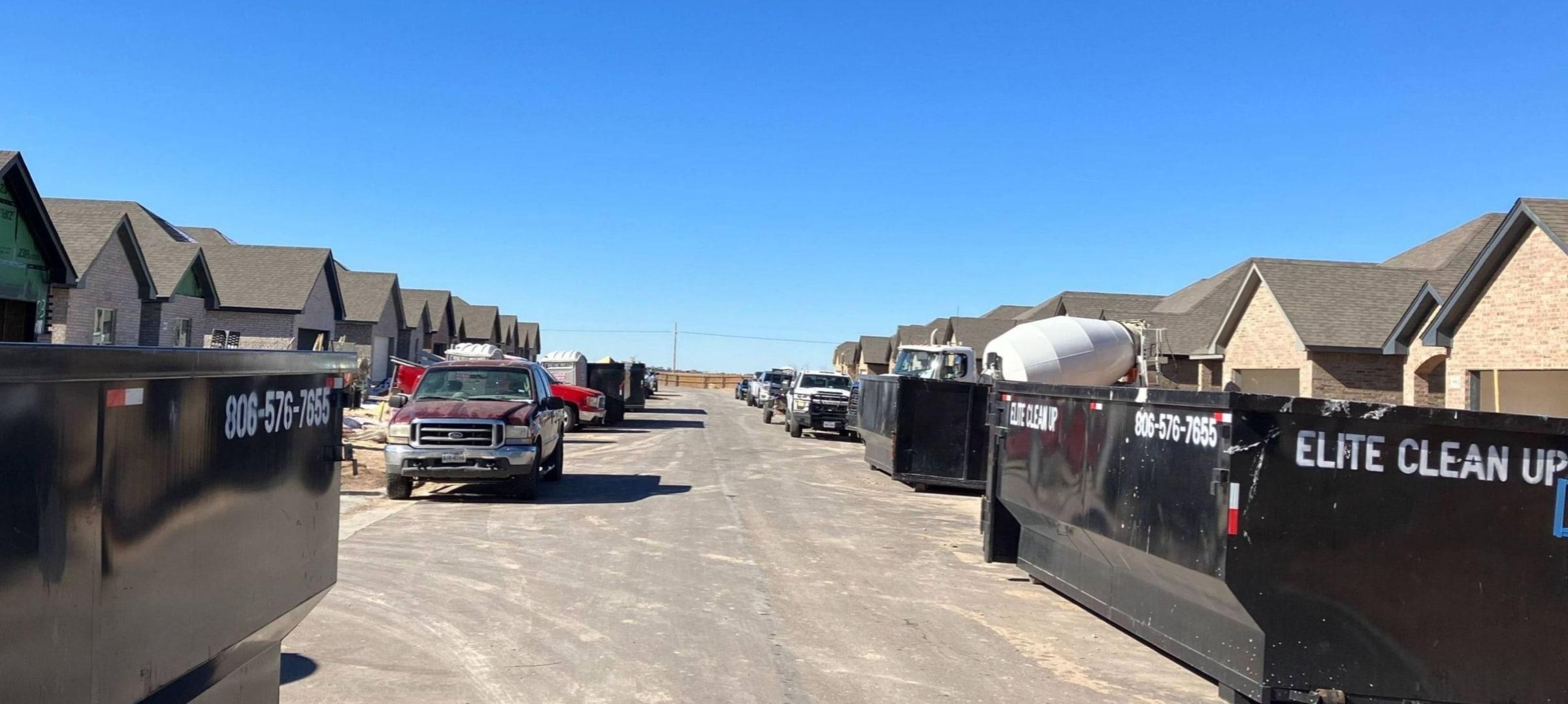
One call for the cleanup and the boxes.
Tell us what's on the site and where it is. We'll walk it, quote the whole job in writing, and set our dumpster before the work starts.