Fire · wind · hail · after the claim
Fire and storm-damaged structures
What happens to a house or building after a fire or storm?
Once the insurance adjuster has seen it and the owner gives the go-ahead, we handle the tear-down, the haul-off and the cleanup. Elite Cleanup walks the site, lines up permits and utility disconnects, sets our dumpsters, and manages the demolition crew until the lot is clear. One call, start to finish, when you already have plenty going on.
Updated
Permits and rules
Sourced. Rules change, so we confirm what applies before every job.
Demolition permit
The City of Amarillo requires a permit from Building Safety before a building is demolished. On our jobs, the partner contractor pulls it.
Licensed contractor and Lot Clearance Bond
Amarillo's contractor licensing rules add a Lot Clearance Bond requirement for building demolition.
Source: City of Amarillo — Building Safety (contractor licensing table)
Gas and electric
In Amarillo, electricity comes from Xcel Energy and natural gas from Atmos Energy. Both get disconnected before any structure comes down. Outside Amarillo, call your utility.
Asbestos: a single house
Texas DSHS says one private residence isn't subject to the federal asbestos NESHAP rules, so no DSHS notice is required. That changes if other homes or commercial buildings on the same site are coming down too, or the building has more than four units.
Asbestos: commercial and public buildings
Commercial and public buildings need an asbestos inspection before demolition, and DSHS must be notified at least 10 working days before the demolition starts, even when no asbestos is found. Public buildings must be surveyed by a DSHS-licensed inspector. Any asbestos found is removed first by licensed abatement professionals. We don't do abatement.
Outside Amarillo
Every city and county sets its own rules. Outside Amarillo, check with your city or county before anything comes down. We'll confirm what applies before the job is scheduled.
- Keep your claim number and adjuster's name handy. It helps everyone stay on the same page.
Who handles what
We handle
- A walk-through once the adjuster has documented the damage
- Permit and utility disconnect steps lined up first
- Our dumpsters set and swapped for the whole job
- Tear-down of the damaged structure or section
- Separate boxes for framing and for brick or concrete
- Haul-off and a picked-clean site
You decide
- When your insurance has what it needs
- Whether the whole structure comes down or just the damaged part
- Anything to salvage before work starts
- What the site should look like for the rebuild
Not part of the job
- Insurance claims or adjusting
- Asbestos abatement — a DSHS-licensed abatement contractor handles that first
- Board-up or emergency tarping
How it goes
Walk-through
We walk the site after the adjuster, not before. Nothing comes down until your claim has what it needs.
Permits and utilities
Utilities are confirmed off and the permit is in place. Damaged structures can need testing first.
Dumpster set
A big box for the structure, and a 15 or 20-yard if brick or concrete is coming out.
The work
The demolition crew takes down what's unsafe or ruined, in the order the structure allows.
Haul-off
We swap full boxes and haul every load to a licensed disposal facility.
Final cleanup
We go over the site for nails, glass and burned or broken material, so it's safe for the rebuild crew.
The dumpster for this job
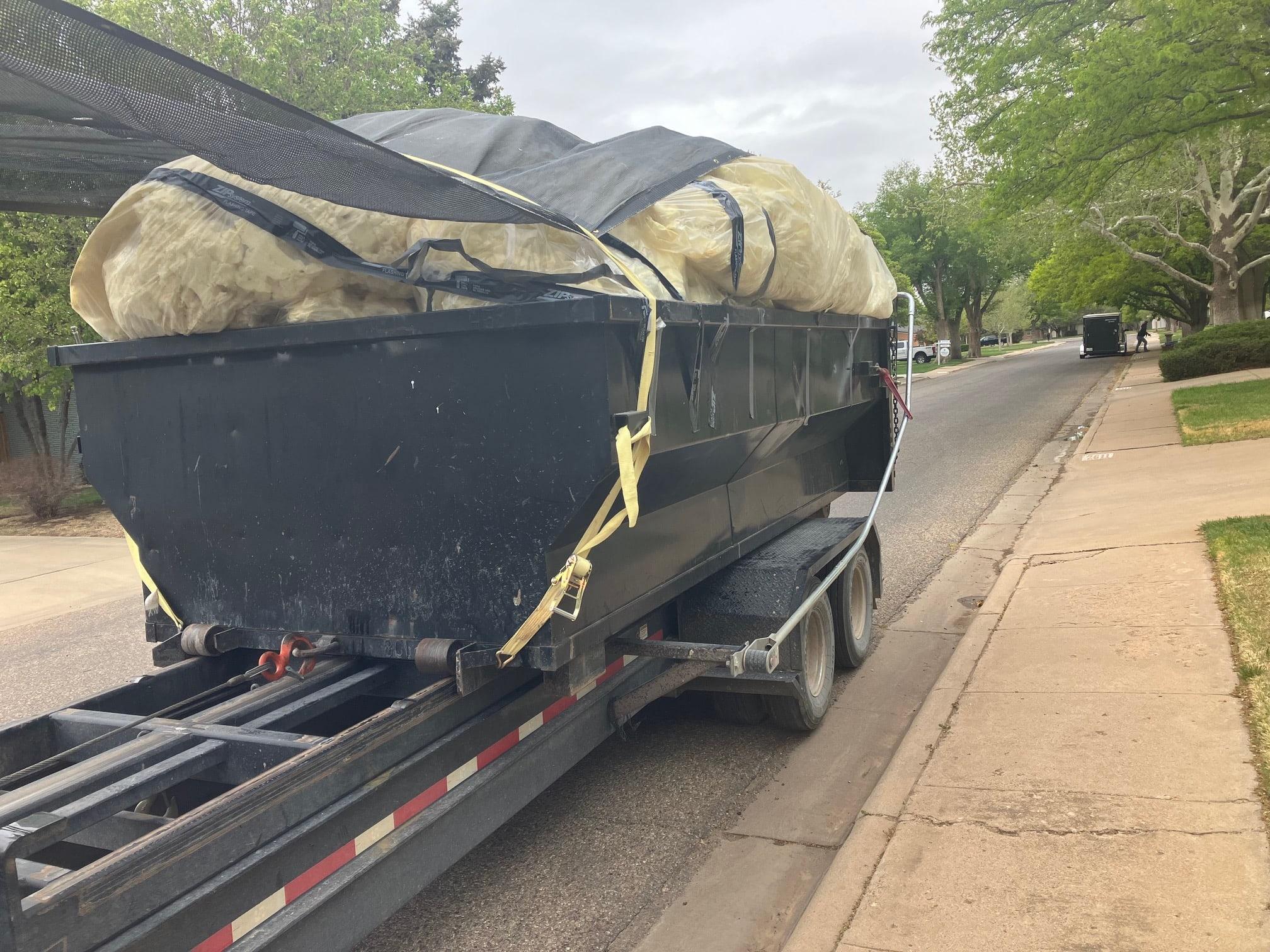
Damaged structures fill boxes fast. A 30-yard handles framing, roofing and contents. Brick, block, concrete and slab pieces go in a 15 or 20-yard box only: concrete, brick, dirt and stone are limited to those two sizes because of the truck's weight. For yard and property debris after a storm, see storm debris cleanup.
Concrete, brick, dirt and stone go in a 15 or 20-yardbox only. Heavy material reaches the truck's weight limit long before it fills a bigger box.
Renting the box on its own? See dumpsters for demolition jobs or compare all four sizes.
Should I wait for the adjuster?
Yes. Don't tear down anything your insurance hasn't documented. Take your own photos too. Once you have the go-ahead, call us and we'll walk the site.
If part of the structure is unsafe in the meantime, keep people away from it and tell us when you call.
What affects the price
- Size of the structure and how much of it comes down
- How much is brick, block or concrete
- Contents still inside
- Testing or abatement needed first
- Access around the damage
Every job is quoted after the walk-through, in writing, with the dumpster and the haul-off in the same number.
Questions we get
Who does the demolition?
Elite Cleanup manages it from quote to final cleanup and puts our dumpsters on site. The demolition is done by licensed, insured local contractors we partner with.
Can you handle just the damaged part?
Often, yes. Partial demolition takes out the damaged section and protects what stays. We'll look at it with you.
Do you work with insurance?
We don't adjust claims. We give you a clear scope and quote you can share with your adjuster.
Tear-down, haul-off, cleanup. One call.
Tell us what's on the site and where it is. We'll walk it, quote the whole job in writing, and set our dumpster before the work starts.