
After the teardown
Post-demolition cleanup
What's left after a house or building comes down?
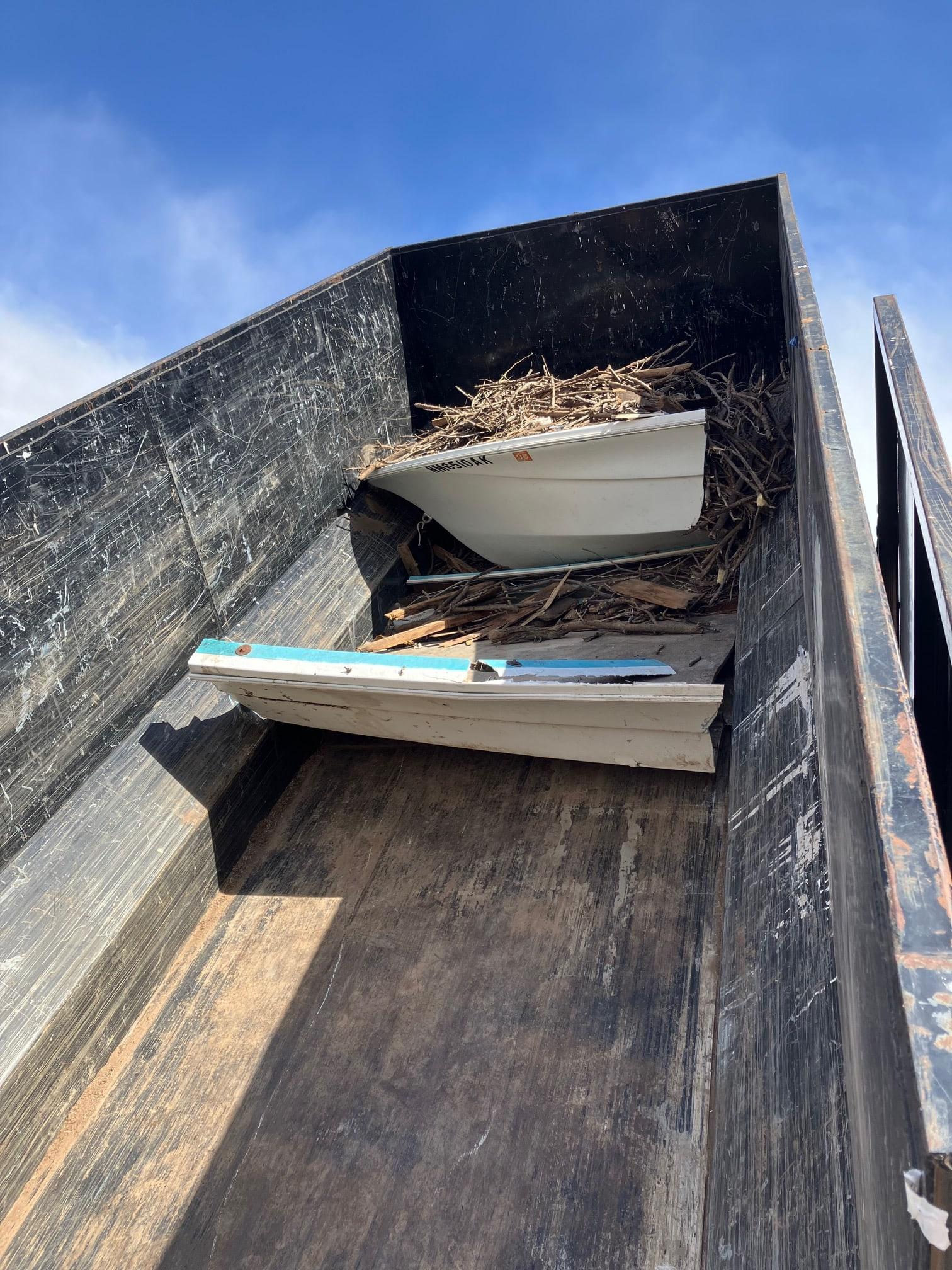
More than people think: nails, broken glass, small debris worked into the dirt, and scraps along the fence lines. We handle post-demolition cleanup in Amarillo and the Panhandle, whether we managed the demolition or someone else did. Our dumpster stays on site, and we leave the lot cleared and ready to grade or build.
Updated
What's included
- Remaining debris, scrap and broken glass picked up
- Nails and metal swept from the work area
- Fence lines, alleys and neighboring edges checked
- Our dumpster on site and the haul-off
- Heavy material kept in its own box
- The lot left ready for grade or the next build
Not part of the job: Removing the slab or foundation — see slab and foundation removal; Final grade — see final grade and site prep.
How it goes
- 1Walk-through
- We walk the lot after the teardown and see what's still on the ground.
- 2Permits and utilities
- Permits get pulled where the city requires them, and gas, electric and water are disconnected before anything comes down.
- 3Dumpster set
- If our box isn't already there, we set one where the truck can reach it.
- 4The work
- Debris is picked up working from the edges inward, so nothing gets pushed into the neighbor's yard.
- 5Haul-off
- We swap full boxes and haul every load to a licensed disposal facility.
- 6Final cleanup
- A last sweep for nails and glass, so the lot is safe for the next crew.
Can you clean up after a demolition someone else did?
Yes. If another contractor did the teardown and left the lot rough, we'll walk it, quote the cleanup, and bring our dumpster. If you're still planning the demolition, one company for the tear-down, the haul-off and the cleanup is simpler — see our demolition pages.
The dumpster for this job
What's left after a teardown is often the heavy stuff: brick, broken concrete and dirt mixed with debris. Concrete, brick, dirt and stone only go in a 15 or 20-yard box, because heavy loads hit the truck's legal weight before a bigger box is full. Light leftovers can go in a 30.
| Size | L × W × H | Included | Heavy material | For this job |
|---|---|---|---|---|
| 20-yard | 14 × 7 × 5.5 ft | 30 days · 3 t | Yes | Mixed leftover debris with some masonry. 3 tons included. |
| 15-yard | 14 × 7 × 4.5 ft | 30 days · 2 t | Yes | Concrete chunks, brick and dirt — heavy material only. 2 tons included. |
| 30-yard | 20 × 7 × 6.5 ft | 15 days · 4 t | No | Light, bulky leftovers like lumber and roofing. |
Concrete, brick, dirt and stone go in a 15 or 20-yardbox only. Heavy material reaches the truck's weight limit long before it fills a bigger box.
Renting the box on its own? See dumpsters for demolition jobs or compare all four sizes.
What affects the price
- Size of the lot and the footprint
- How much debris was left behind
- Heavy material that needs a 15 or 20-yard box
- Whether the slab is staying or going
- Number of dumpster swaps
Every job is quoted after the walk-through, in writing, with the dumpster and the haul-off in the same number.
Questions we get
Will you pick up nails?
Yes. A nail sweep is part of the final pass, so the lot is safe for tires, feet and the next crew.
Does the cleanup include removing the slab?
No, the slab is a separate job. We can quote both together if it's coming out.
Can the cleanup and grade happen together?
Yes. Cleanup first, then final grade and site prep.
One call for the cleanup and the boxes.
Tell us what's on the site and where it is. We'll walk it, quote the whole job in writing, and set our dumpster before the work starts.